
Setting the Scene
Fresh grass is spread on the floor, and incense is burned to create a sacred atmosphere. The hostess wears traditional white dress.
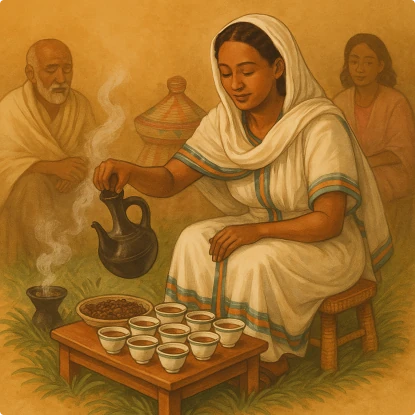
Coffee culture
A sacred tradition of hospitality, community, and spiritual connection.
The sacred ceremony
The coffee ceremony (Buna) is an essential social event in Ethiopian culture. Fresh beans are roasted, ground, and brewed in a clay pot (jebena) in a ritual that can take several hours.
Coffee is served in three rounds in small cups (sini), starting with the elders. Each round has its own name and significance, creating a communal experience that strengthens social bonds.
The five sacred steps
Each step in the coffee ceremony has deep cultural significance.
Fresh grass is spread on the floor, and incense is burned to create a sacred atmosphere. The hostess wears traditional white dress.
Green coffee beans are washed and roasted in a pan over an open flame. The aromatic smoke is wafted toward guests as a blessing.
The roasted beans are ground by hand using a traditional mortar and pestle (mukecha), creating a fine powder.
The ground coffee is mixed with water in a clay pot called a jebena and brought to a gentle boil over charcoal.
Coffee is served in three ceremonial rounds: Abol, Tona, and Baraka, each with its own blessing.
The ceremony brings families and neighbors together, strengthening social connections and fostering dialogue.
Each round of coffee is believed to carry blessings, with the third round being especially sacred.
The ceremony preserves ancient traditions and passes Ethiopian coffee culture to new generations.